r_med

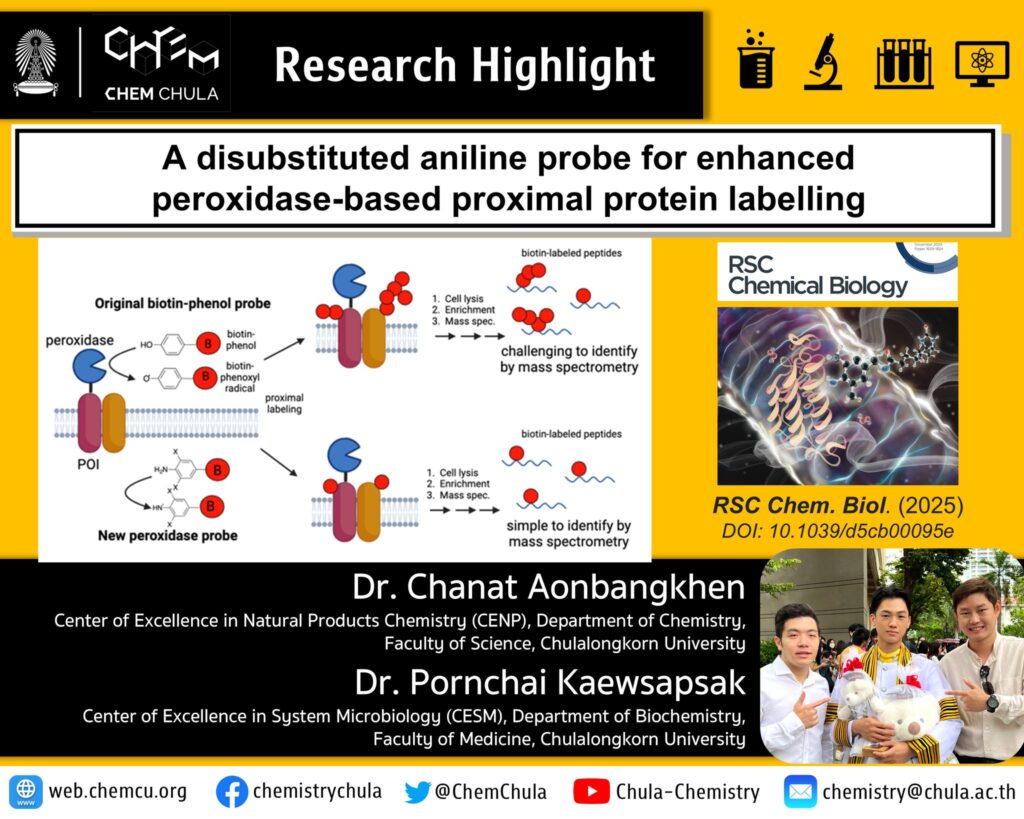
A disubstituted aniline probe for enhanced peroxidase-based proximal protein labelling

 Proteins are biomolecules essential for cellular functions, including cell signaling and regulation. Protein misfolding or mislocalisation can result in various diseases. Peroxidase-mediated proximity labelling has emerged as a powerful tool for studying subcellular proteome and protein–protein interactions. However, the traditional probe, biotin-phenol, suffers from limitations including low protein enrichment efficiency, and the formation of oxidised …

A disubstituted aniline probe for enhanced peroxidase-based proximal protein labelling Read More »
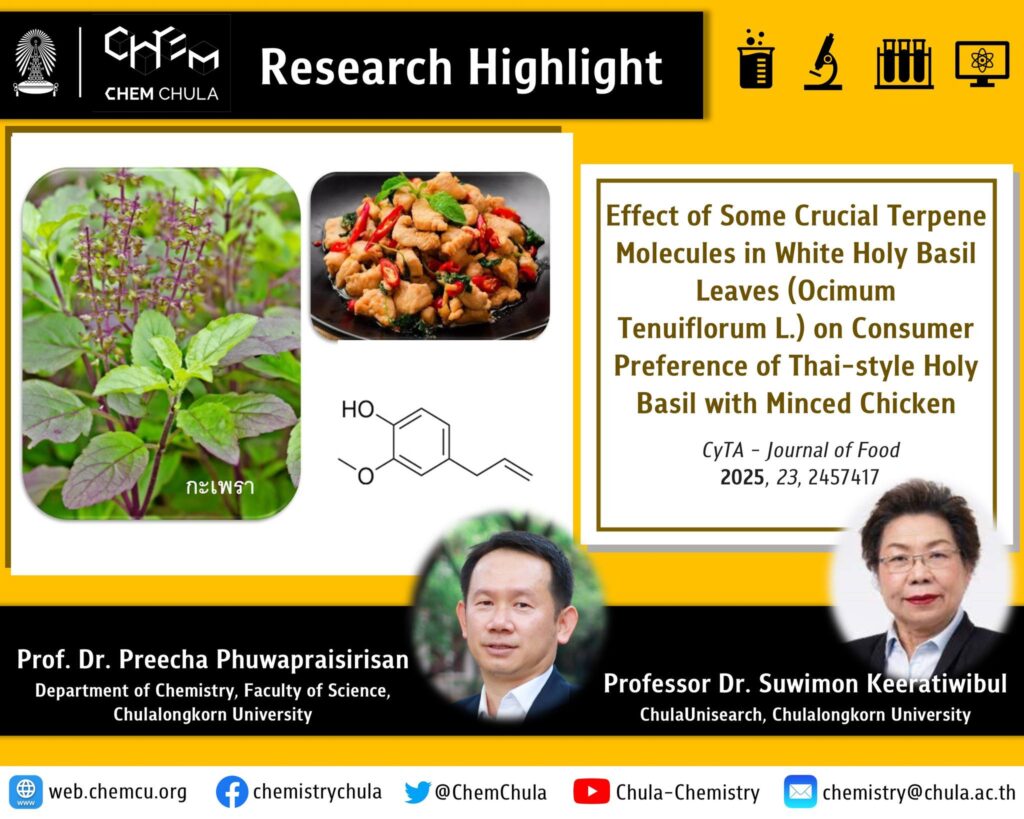
Terpene Compounds in White Holy Basil Leaves on Consumer Preference for Chicken Stir-Fried with Holy Basil

Eugenol (clove-like odor), 3-hexenal (grassy, green odor), α-pinene (terpeny, herb, resin-like odour), trans-β-farnesene (floral, herb-terpeny odor), and caryophyllene oxide (citrus-like, woody, herb-terpeny odor) were identified as aroma-active compounds. The recombined flavor mixture enhanced the aroma of stir-fried chicken with white holy basil when combined with fresh leaves, as Thai consumers preferred this aroma over that …

Terpene Compounds in White Holy Basil Leaves on Consumer Preference for Chicken Stir-Fried with Holy Basil Read More »

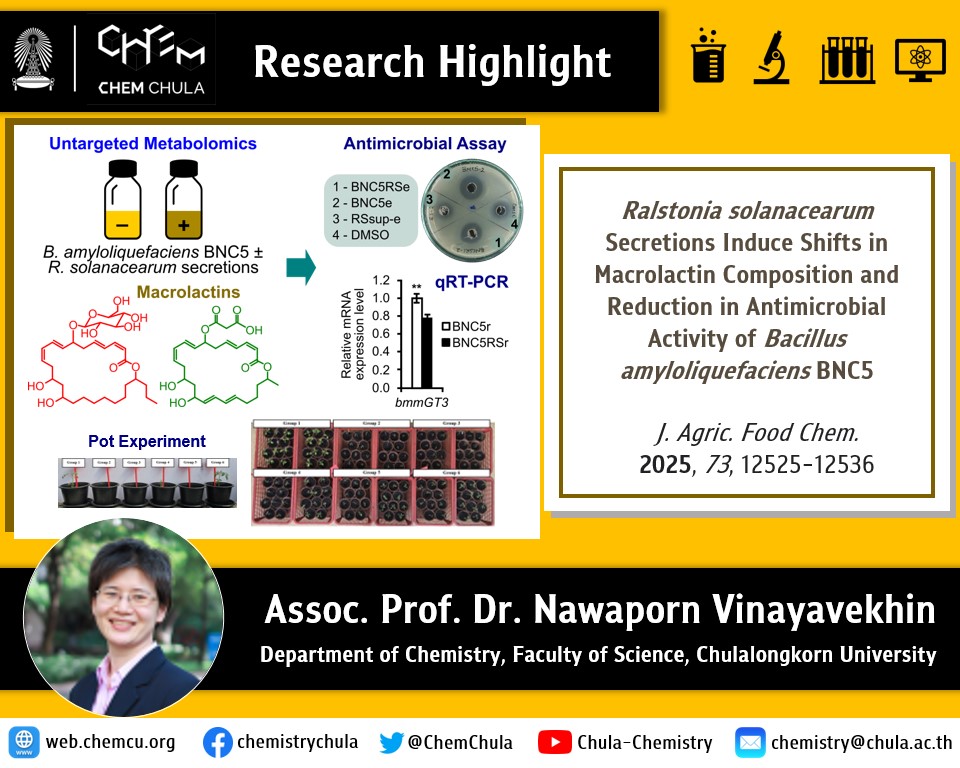
Ralstonia solanacearum Secretions Induce Shifts in Macrolactin Composition and Reduction in Antimicrobial Activity of Bacillus amyloliquefaciens BNC5

Using untargeted metabolomics, researchers uncovered the mechanisms underlying the battle between the plant wilt pathogen Ralstonia solanacearum and the biocontrol microbe Bacillus amyloliquefaciens BNC5. Normally, BNC5 produces antimicrobial macrolactins to eliminate its competitors. However, when exposed to substances secreted by R. solanacearum, the macrolactin profile shifted, resulting in reduced inhibitory efficacy. Interestingly, the researchers found …

Ralstonia solanacearum Secretions Induce Shifts in Macrolactin Composition and Reduction in Antimicrobial Activity of Bacillus amyloliquefaciens BNC5 Read More »

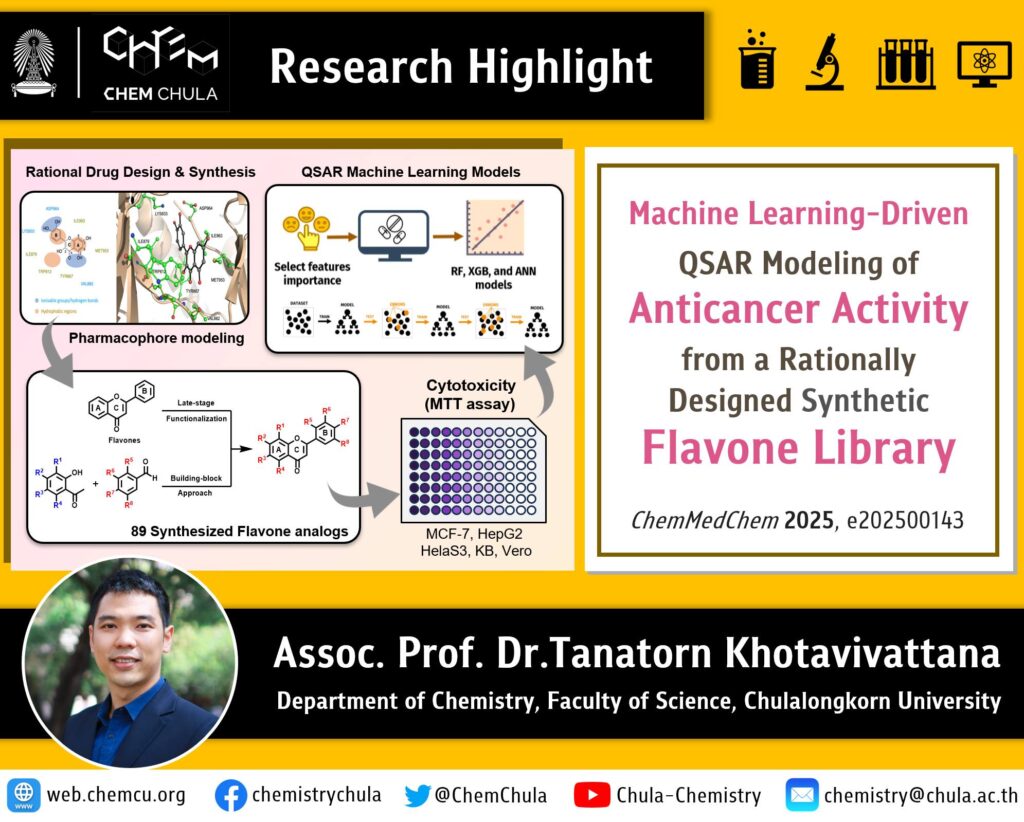
Training AI to Predict Anticancer Activity from Rationally Designed Flavones

As artificial intelligence (AI)  continues to transform medicine and pharmaceuticals, its role in accelerating the discovery of bioactive compounds is becoming increasingly crucial.  A research team led by Assoc. Prof. Dr. Tanatorn Khotavivattana from the Department of Chemistry, Faculty of Science, Chulalongkorn University, in collaboration with experts from multiple institutions, designed and synthesized 89 flavone derivatives, …

Training AI to Predict Anticancer Activity from Rationally Designed Flavones Read More »

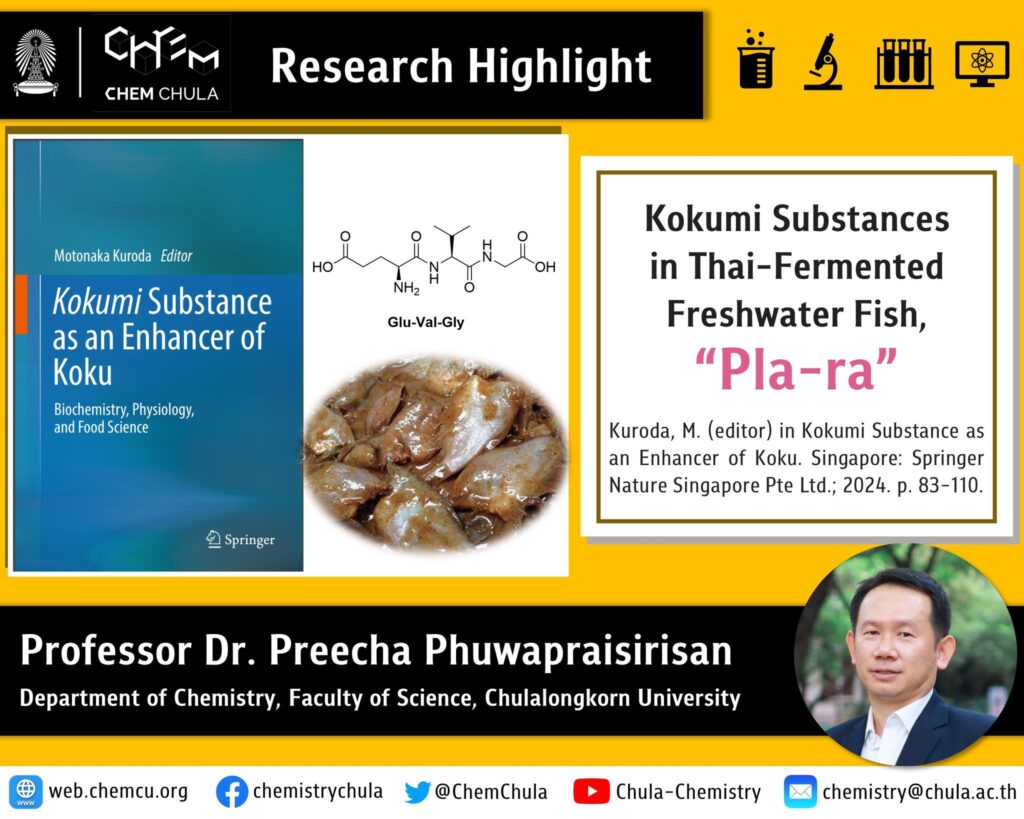
Kokumi Substances in Thai-Fermented Freshwater Fish, “Pla-ra”

Pla-ra, a semisolid/liquid fermented fish product, has been a stable ingredient for Thai cuisine since ancient times. It is made from three main ingredients (freshwater fish, salt, and carbohydrate sources). Lately, Pla-ra’s popularity has been growing and it has become one of Thailand’s industrial products. This chapter begins with an introduction to many Thai dishes …

Kokumi Substances in Thai-Fermented Freshwater Fish, “Pla-ra” Read More »

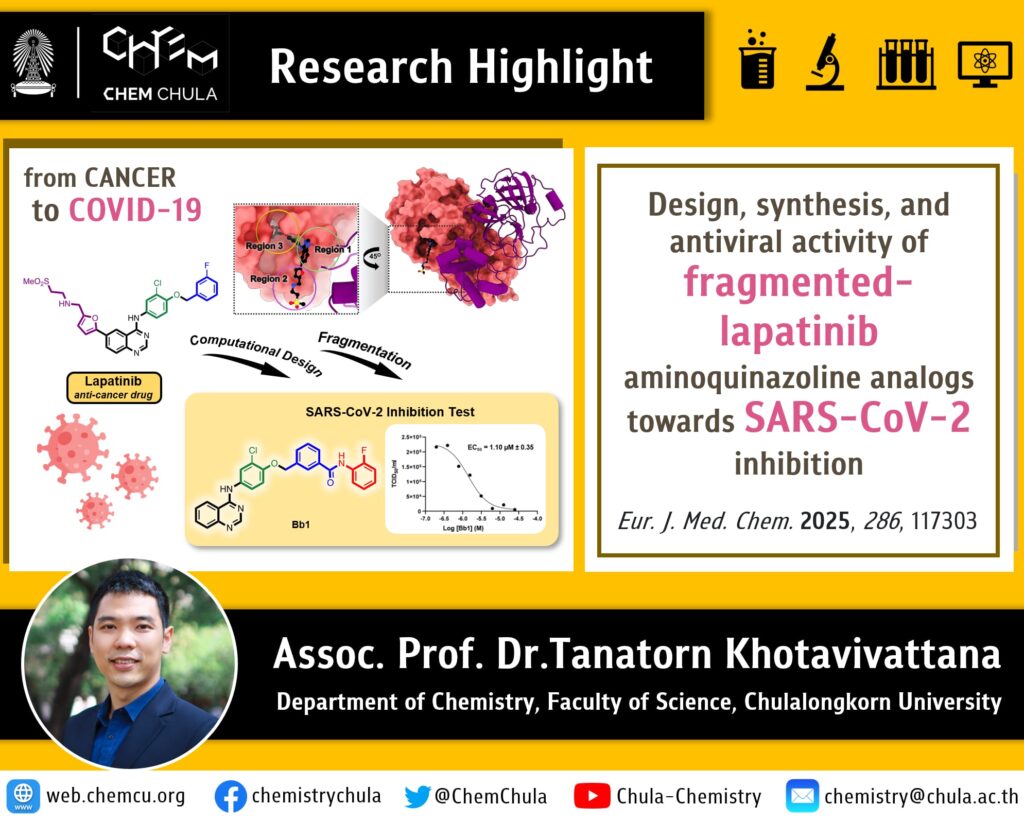
Rational Design of COVID-19 Drug Leads from Cancer Therapeutics

Although the COVID-19 pandemic has eased, the virus continues to evolve. The development of new, targeted antiviral drugs remains crucial for preparedness against future outbreaks. This research began with drug repurposing screening, which revealed that lapatinib—an approved breast cancer drug—can bind to and inhibit the main protease (Mpro) of SARS-CoV-2, a key enzyme required for …

Rational Design of COVID-19 Drug Leads from Cancer Therapeutics Read More »