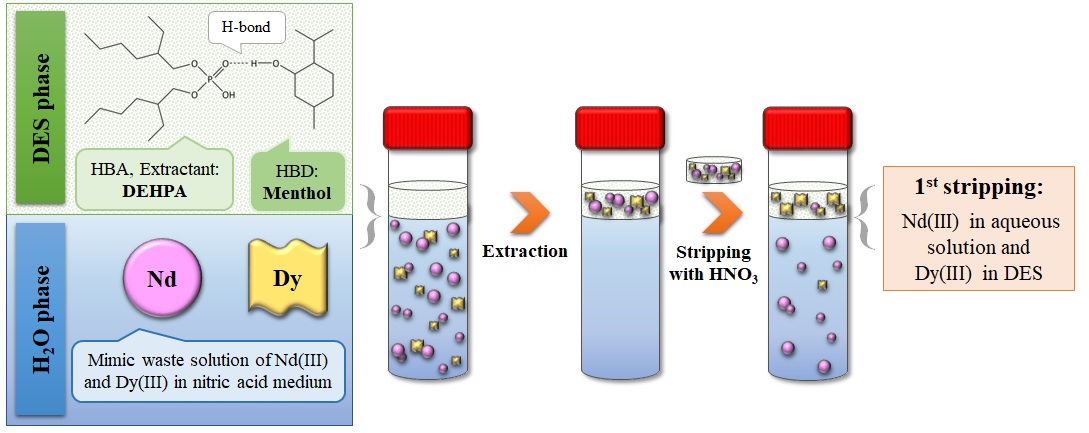
Extraction of lanthanide ions have been explored uisng alternative green solvents, such as deep eutectic solvents or ionic liquids, to recover precious ions, especially Nd(III) and Dy(III), from secondary sources like NdFeB magnet waste leachate.
Keywords: Lanthanide ions, ionic liquids, deep eutectic solvents
Assoc. Prof. Apichat Imyim
Extraction of Lithium Ions using Deep Eutectic Solvents
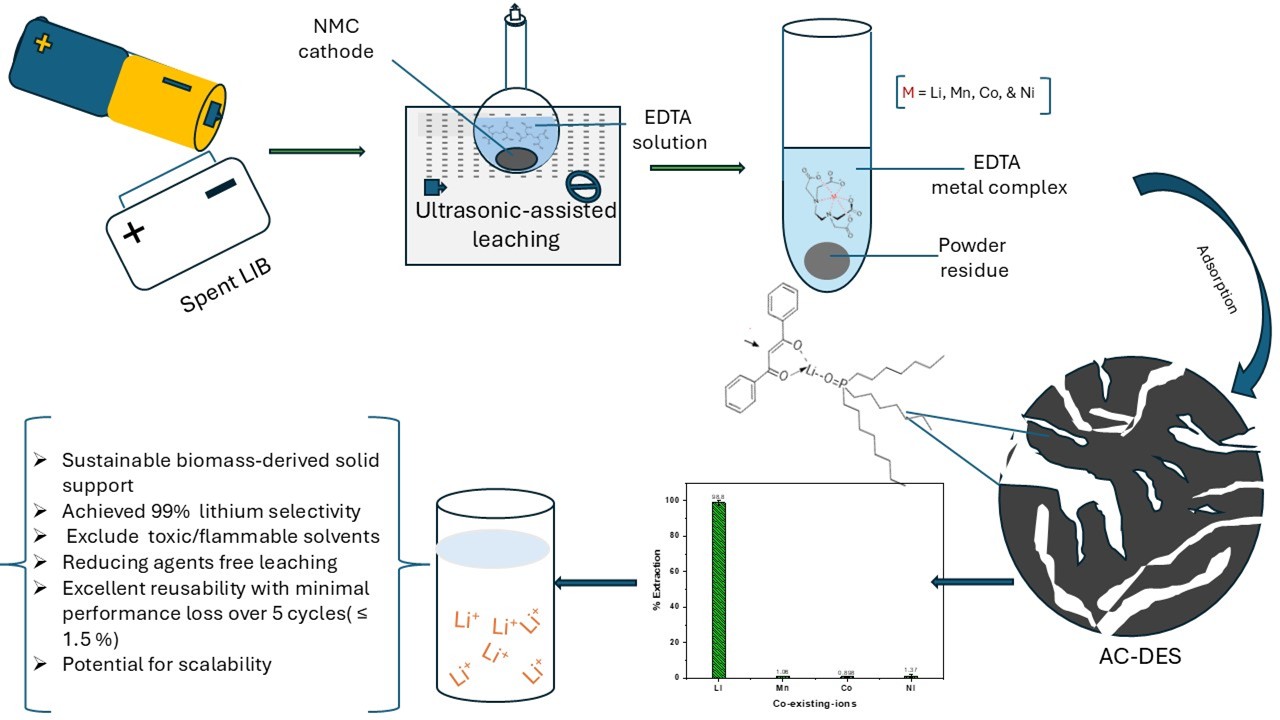
This research focuses on the green separation and recovery of lithium ions using Deep Eutectic Solvents (DES) as sustainable alternatives to conventional organic solvents. The work aims to design environmentally friendly solvent systems and functional materials that enable efficient, selective, and low-waste extraction processes. Current studies include the development of advanced adsorbents for lithium recovery from spent lithium-ion batteries and natural brine sources, integrating green chemistry principles with resource circularity. This approach supports the sustainable supply of critical raw materials and contributes to the advancement of clean energy technologies and circular economy practices.
Keywords: Extraction, Lithium, Deep Eutectic Solvents, Solid Phase Extraction, Recovery
Assoc. Prof. Prompong Pienpinijtham
Surface-Enhanced Raman Scattering (SERS) for Nanoplastic Detection
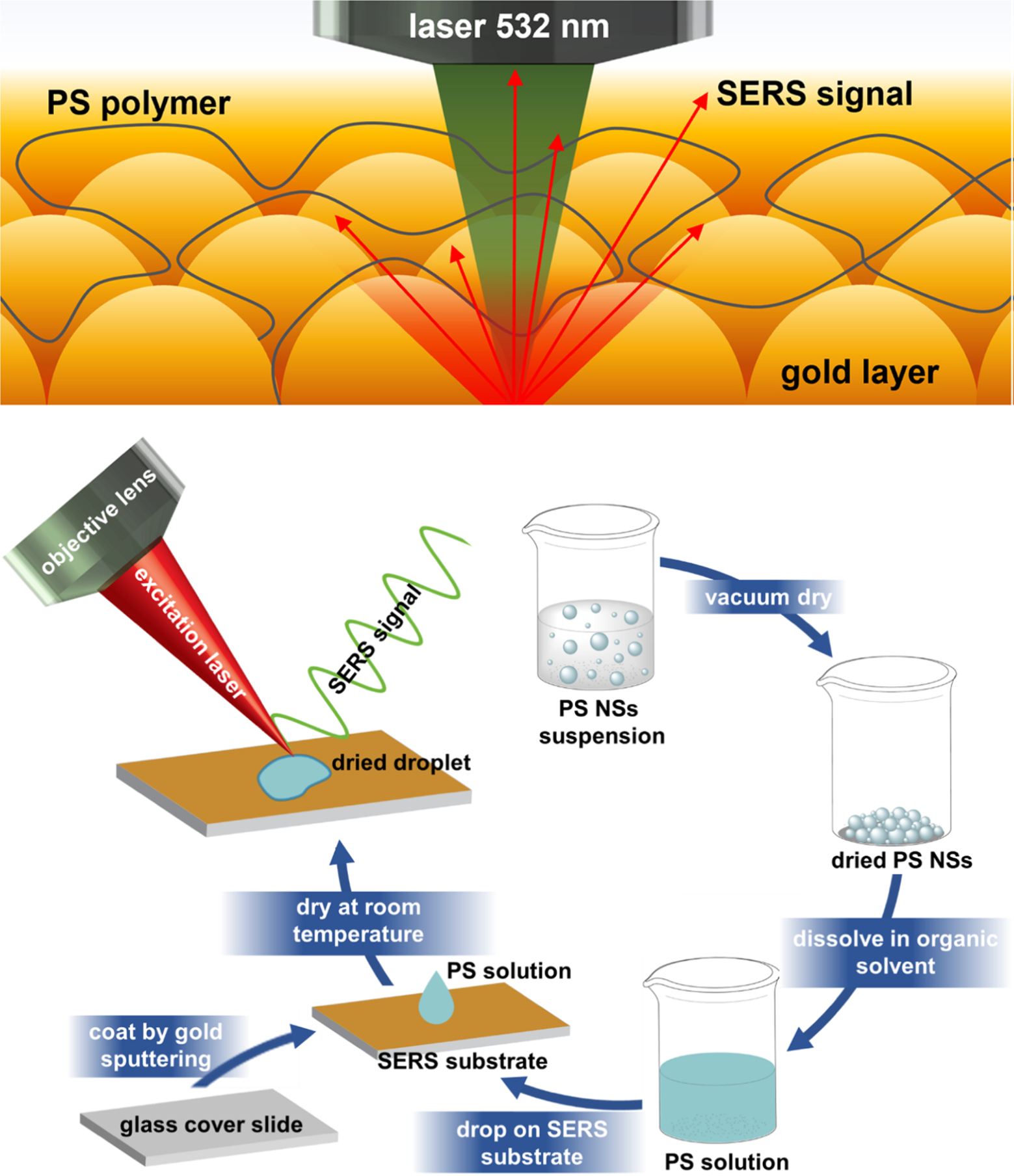
Nanoplastics, tiny plastic particles less than 1,000 nanometers in size, pose a growing environmental concern due to their potential harm to ecosystems. Detecting these miniscule particles is challenging, but surface-enhanced Raman scattering (SERS) emerges as a promising technique. SERS utilizes rough metal surfaces to amplify the weak Raman signal of molecules, allowing scientists to identify the specific type of nanoplastic by analyzing its unique spectral fingerprint. Assoc. Prof. Dr.Prompong Pienpinijtham, a researcher at Chulalongkorn University, is at the forefront of this field. His work tackles two key challenges in SERS-based nanoplastics detection: developing methods for size-independent quantification and demonstrating greener approaches like using untreated filter paper for polystyrene nanoplastics. Despite its promise, challenges like separating nanoplastics from environmental debris remain. However, further research on optimizing SERS methods, as Assoc. Prof. Dr.Prompong Pienpinijtham continues to explore, holds significant promise for more robust detection of nanoplastics in real-world environmental samples.
Geographical profiling and authentication of Thai food and agricultural products by chemical analysis
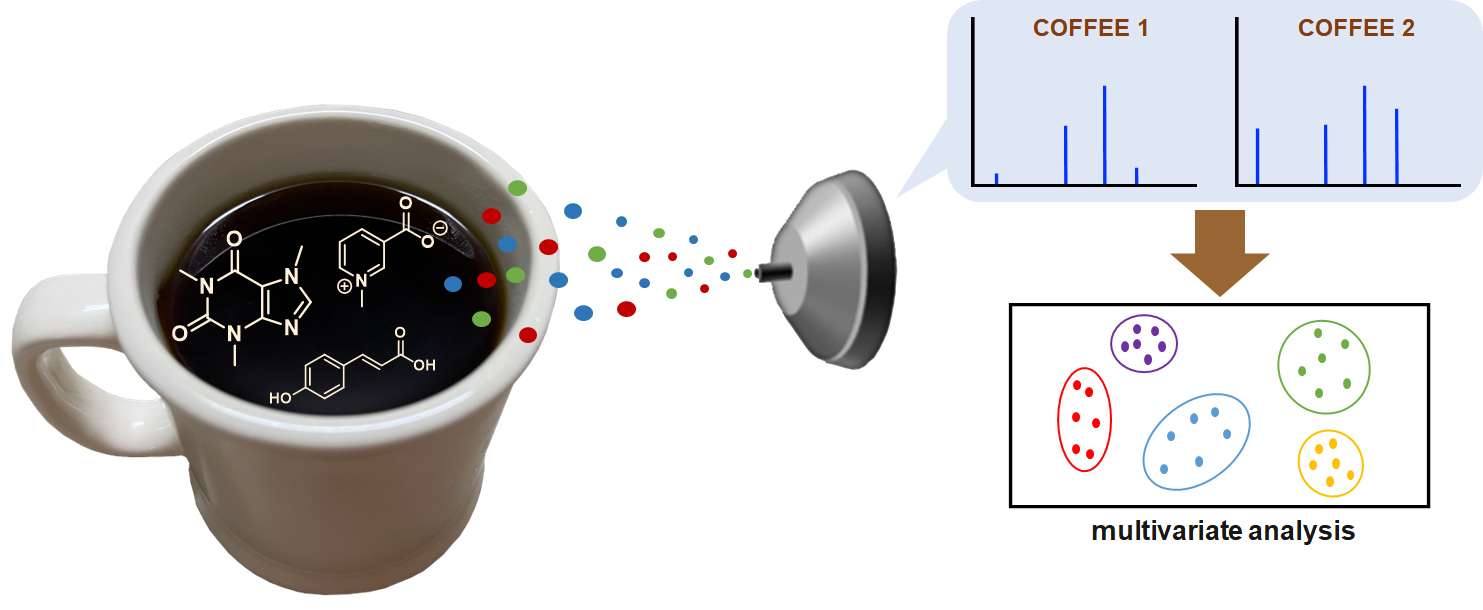
The research interest in my laboratory deals with the application of mass spectrometry-based techniques to collect chemical data in foods and agricultural products. The obtained data were then used to classify products based on attributes of interest such as geographical origins, processing types, and possible adulteration – all of which were performed with an aid of multivariate analyses. This research is a unique experience to combine skills in analytical instrumentations, data sciences, and some bit of sample preparation of organic samples. Among prominent subjects of study in the lab include durian, Thai coffees, and pineapples.
Keywords: Geographical indication, Mass Spectrometry, Chromatography, Chemometrics
Assoc. Prof. Kanet Wongravee
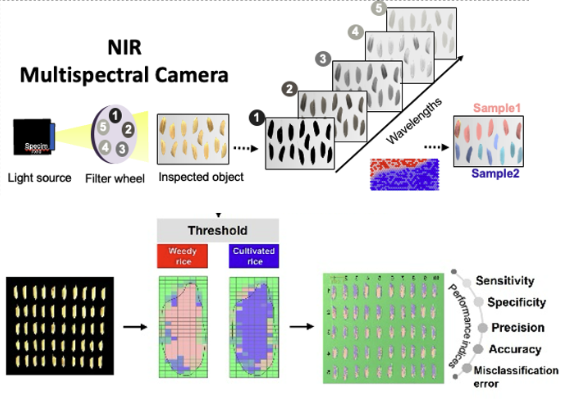
Application of NIR combined with Chemometrics for quality assessment of food/agricultural products
A new analytical approach using SOMs in hyperspectral data is proposed for classification purposes. The developed supervised SOMs were applied on pair-wise HSI to establish the supervised global SOM map of the reference classes. All parameters involving scaling value and map size were systematically optimized. The pair-wise pixels of an unknown sample were projected onto the global SOM map in order to determine the class of each image pixel. The class of each pixel was projected onto the image by a simple display using the color scale . Thereafter, the class of each sample image was determined using the golden ratio of the projected color on the image with a receiver operating characteristic (ROC) curve. This approach is more appropriate for real implementations using NIR-HSI systems within the wavelength region of 1000–1600 nm for agricultural seed quality as it classifies based on individual seed images.