
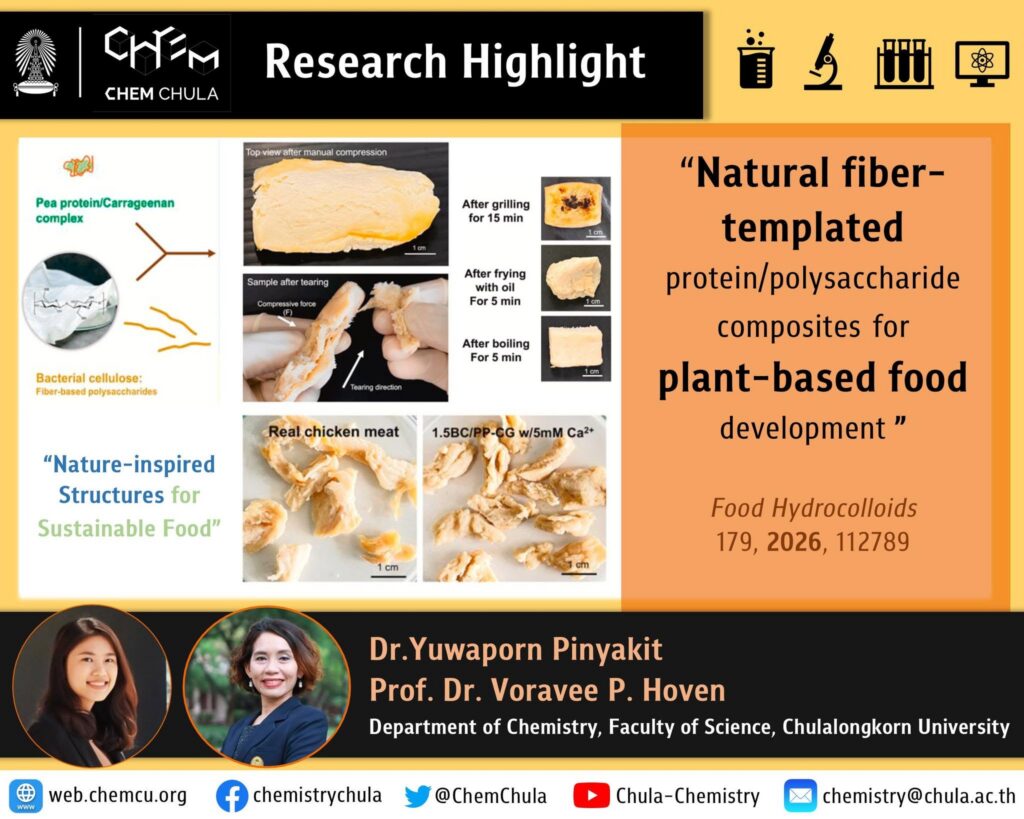
Amid the growing global demand for sustainable food systems, reduced carbon emissions, and healthier dietary choices, the development of plant-based meat that can closely replicate both the sensory properties and structural complexity of animal meat remains a significant challenge. In particular, recreating the fibrous texture that mimics muscle tissue is difficult, as current technologies typically rely on energy-intensive processes machine-based structuring, which increase production costs and limit accessibility. This study proposes a novel approach by utilizing natural fibers as a “structural template” to guide the assembly of plant proteins and polysaccharides into fibrous architectures under controlled conditions, without the need for complex machinery or high energy input. The resulting structure can be torn into strands resembling real chicken meat and exhibits excellent water-holding capacity, enhancing juiciness and preventing dryness during cooking. In addition, key mechanical properties, including hardness, chewiness, and elasticity closely resemble those of real chicken, reflecting its potential to deliver a more realistic eating experience. For a nutritional perspective, the cellulose-based network also plays a role in prohibiting enzymatic digestibility, potentially slowing starch digestion and reducing glucose release, which may contribute to improved glycemic control. Therefore, this approach not only addresses the limitations of current processing methods in terms of energy and cost but also provides a promising strategy for designing next-generation plant-based foods with realistic texture, improved nutritional functionality, and enhanced environmental sustainability, meeting the needs of both the food industry and modern consumers.
- Yuwaporn Pinyakit
- Voravee P. Hoven