
 The research group of Dr. Supacha Wirojsaengthong and Assist. Prof. Dr. Pumidech Puthongkham collaborated with Prof. Dr. Wanchai Assavalapsakul from the Department of Microbiology, together with several other researchers, to develop a laser-induced graphene (LIG) electrode–based biosensor for both the detection of Lumpy Skin Disease (LSD) and the evaluation of vaccine efficacy. The platform employs the viral F13L antigen and IgM antibodies, enabling dual-mode operation for quantifying viral antigens indicative of active infection as well as antibodies generated from vaccination or natural infection. The developed platform exhibited high sensitivity at the ng mL⁻¹ level, a wide dynamic concentration range, and a rapid readout time of approximately 10 minutes. When benchmarked against standard methods such as ELISA, the sensor provided acceptable and well-correlated results and performed reliably in real bovine serum samples, including those from naïve, vaccinated, and infected animals. This work represents an important step toward the practical application of laser-induced graphene electrodes as electrochemical biosensors for livestock disease surveillance, offering a low-cost, rapid, and accurate solution suitable for real-world field deployment.
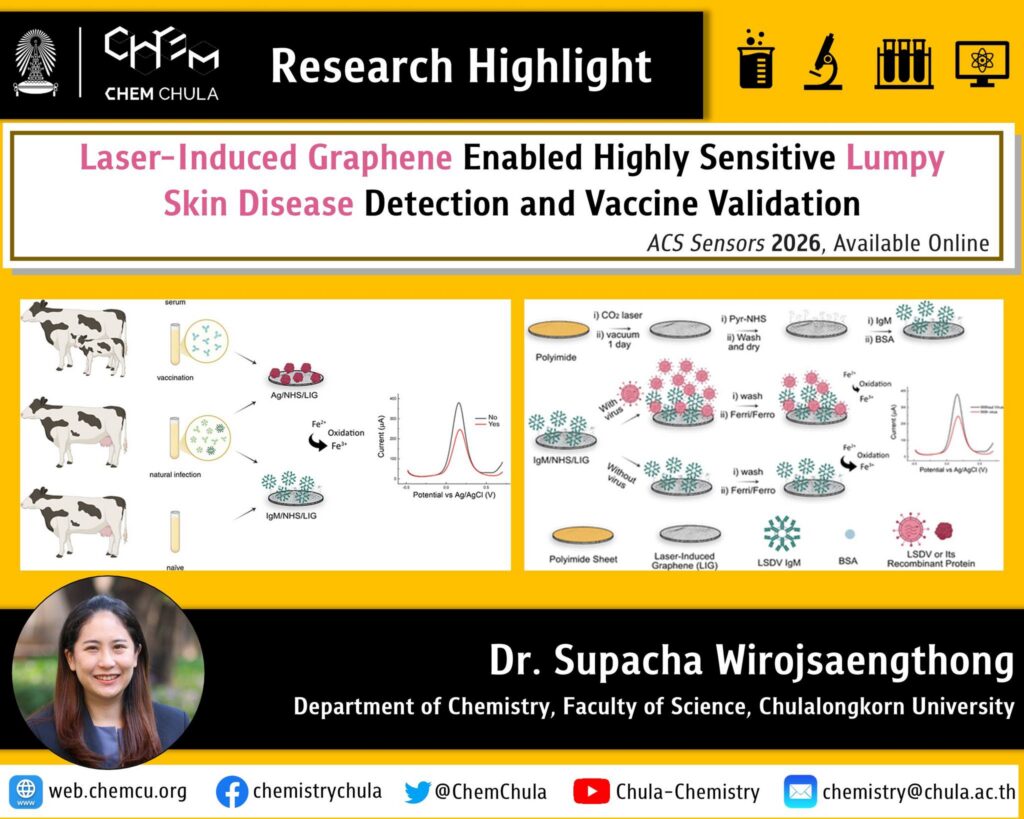
Laser-Induced Graphene Enabled Highly Sensitive Lumpy Skin Disease Detection and Vaccine Validation
/ Research highlight / By