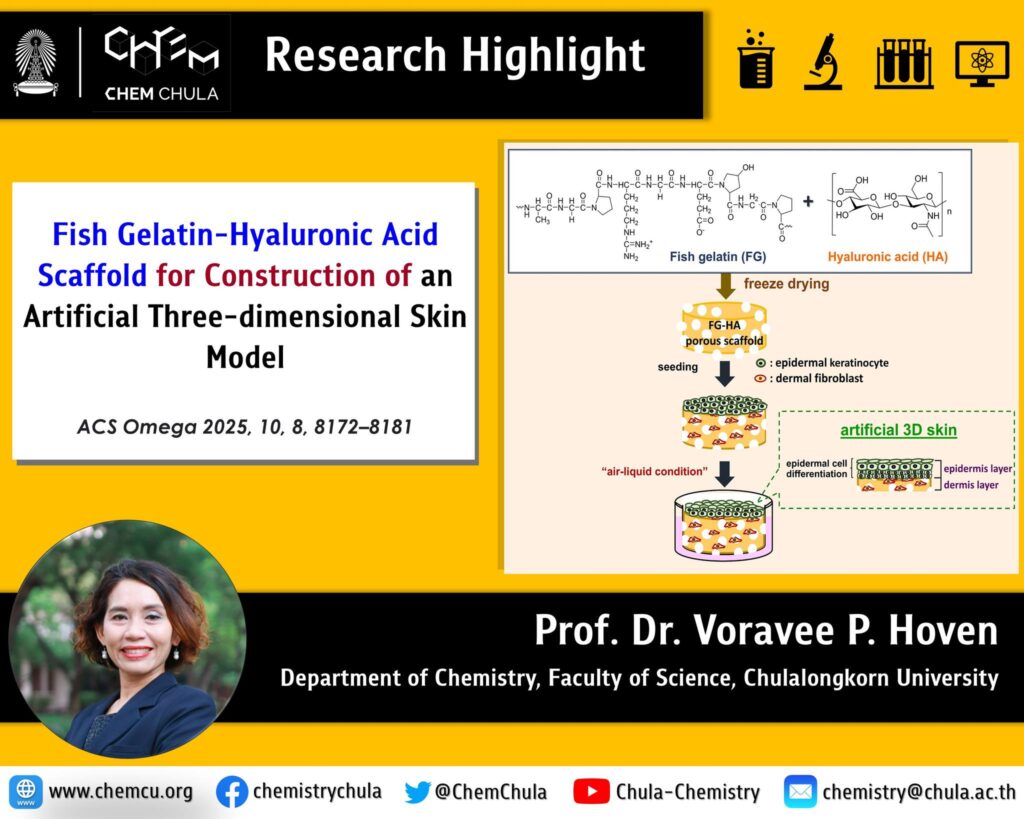
 Artificial three-dimensional (3D) skin has been used as an alternative material for toxicity testing, studying skin diseases, and skin tissue engineering. The 3D skin can be fabricated using supporting materials that facilitate cell attachment, promote nutrients and air permeation, and eventually accommodate 3D cellular construction. Herein, fish gelatin-hyaluronic acid porous scaffold were employed as the supporting materials for 3D skin, as they pose no risk of zoonotic infectious disease transmission. The 3D skin was prepared under air–liquid interface conditions. The artificial 3D skin constructed using the fish gelatin–hyaluronic acid porous scaffold exhibited good mechanical properties and showed no contraction. Histological analysis of the prepared 3D skin demonstrated the proliferation and differentiation of skin cells, closely resembling native human skin. It exhibited a bilayer structure consisting of dermal and epidermal layers, with keratinocyte differentiation similar to that seen in native human skin.