
 This research focuses on the design and modification of high surface area, porous materials known as metal-organic frameworks (MOFs). The objective is to utilize these materials as catalysts to convert carbon dioxide (CO2) into high-value cyclic carbonates, which are crucial for the polymer and battery industries. MOFs typically suffer from diffusion limitations because their pores are extremely small (microporous), hindering the transport of larger reactants and products. Therefore, this study successfully addresses this challenge by enlarging the pore structure of the MOFs through acid modulation and heat treatment, all while maintaining the high stability of the MOF framework. Furthermore, the internal surfaces of the MOFs were modified to significantly enhance the quantity and efficiency of the active sites (Lewis acid sites and nucleophiles). The result is a highly efficient bifunctional catalyst that operates effectively under mild, solvent-free experimental conditions, which is a key factor in developing sustainable methods for CO2 utilization in industrial applications.
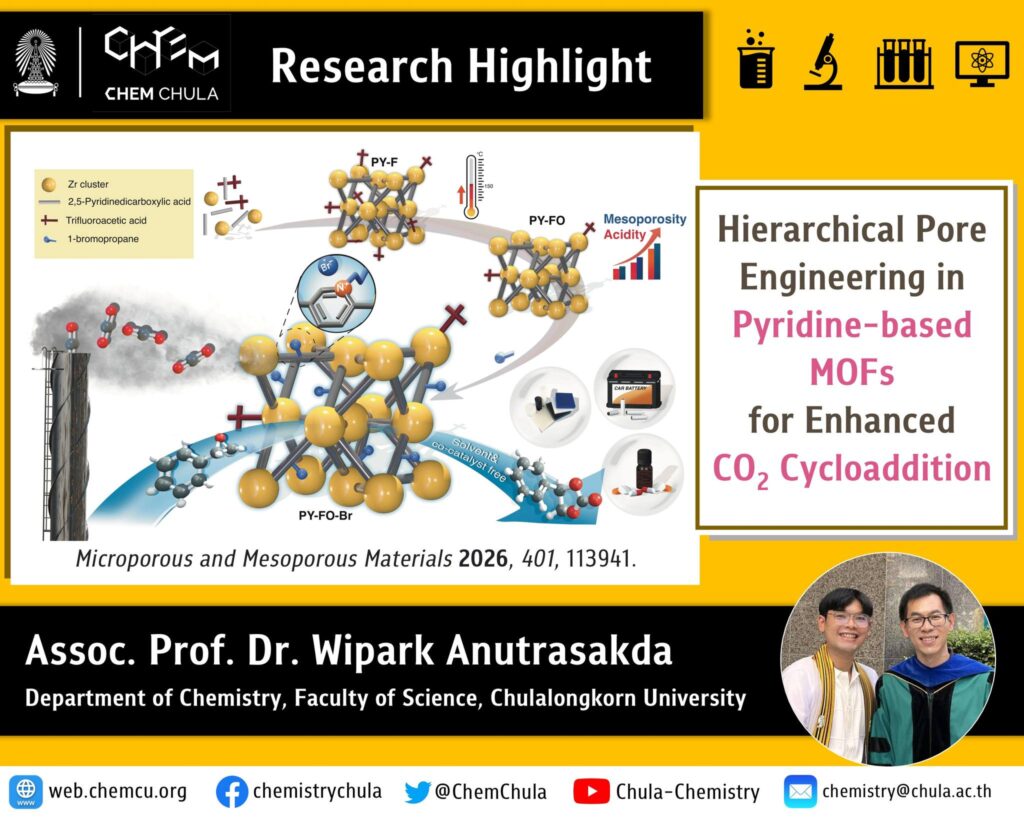
Modified MOF catalysts: CO2 to value-added products
/ Research highlight / By